Computing and learning
Programming, computational thinking, creative pedagogy and learner development connect technical and educational perspectives.
 POLYMATH NEXUSCONSULTANCYRegister
The work behind the polymath profile
Simultaneous Integrative Education–Technology Polymath
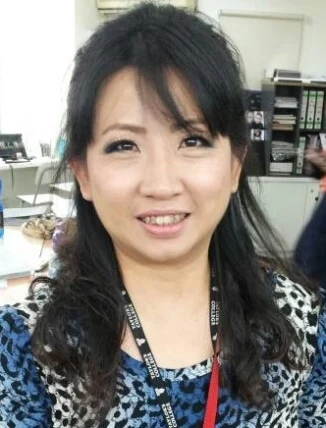
Dr. Eleanor’s profile centres on a bridge between information technology and education. Computational thinking, coding, teacher development, gifted learning, workbooks and training form a connected body of practice in how people learn to think and create with technology.
Why this type fits
The portfolio supports a focused integrative case across education and information technology. Its evidence is the combination of formal study, teaching resources, computational-thinking training and programme work. Education–Technology describes the documented fields more precisely than the former Cognitive-Behavioral label.
We use three lenses: breadth considers the variety of substantive work; depth looks for sustained knowledge, responsibility and outputs; synthesis looks for a useful connection between fields. These lenses draw on research by Michael Araki. They are used here for a portfolio analysis, not a psychometric test or professional accreditation. The complete record below retains every numbered point from the member’s professional profile. Some points support more than one lens; related roles, awards and records are not counted as separate disciplines. Source labels distinguish linked records, supplied professional information and proposals. A point’s inclusion does not imply equal expertise in every area. The descriptions used by this symposium distinguish a supported polymathy case from specialist-led interdisciplinary practice. The explanations are editorial interpretations of the visible record, not independent certifications. No IQ score, personality inference or AI-generated ranking is used as proof.
Research behind the framework ↓01 · Breadth
Programming, computational thinking, creative pedagogy and learner development connect technical and educational perspectives.
Teacher development, corporate training, publications, editorial service and learning enterprise extend that connection into different settings.
02 · Depth
The professional profile lists doctorates in IT and Education, together with other qualifications. The page treats those as qualifications recorded in the supplied profile.
Training, books, research and student projects show applied work beyond the possession of degrees.
The recorded 2014 paper award supports a particular teaching-research contribution.
03 · Synthesis
Computational thinking is adapted into curriculum, classroom tasks and teacher development.
Coding, games, assessment and digital projects connect abstract problem-solving to learner activity.
Corporate training and a learning enterprise connect digital knowledge with organisational and community needs.
04 · Pattern over time
Integrated practice; a complete overlap timeline is not established
The portfolio consistently joins education and computing, while the profile supplies fewer start and end dates for individual training and consultancy roles. That supports an integrated pattern of work, but it is not enough to claim that every listed appointment or programme ran simultaneously.
Simultaneous / concurrent: substantive activity in more than one field during an overlapping period.
Serial / sequential: substantial work in different fields across successive phases of a career.
These are working descriptions of timing, not a hierarchy of “proper” and lesser polymaths. Both patterns can involve breadth, depth and synthesis. A role list without dates cannot establish overlap by itself.
The profile records iCarnegie/Robomatter and Zulama work without a complete set of dates.
The profile dates the award for innovative approaches to learning Physics to 2014.
The society’s editorial role provides a dated additional communication responsibility.
05 · Complete profile map
The numbering follows the professional profile. Open a point to read the original account, its sources and the interpretation used here.
13 of 13 profile points shown
Computing · education Professional profile; selected external sources below
She has advised on integrating Computational Thinking and Computer Science across the curriculum, including consultation to Malaysia’s Ministry of Education. Her approach links computer science problem-solving with everyday learning and teaching practice.
Curriculum consultation is a direct example of transferring computer-science problem-solving into education.
Teacher development Supplied professional profile
As a master trainer through MDEC programmes, she has trained lecturers from teacher-training and public universities and supported educators in bringing Computational Thinking into their subjects. Her supplied profile reports training up to 130 lecturers and about 300 teachers across Malaysia and several other countries.
Repeated training adds practical depth and transfers the approach across educators and subjects. Training counts remain attributed to the supplied profile.
Creative pedagogy Supplied professional profile
Her work focuses on creative teaching, creative motivation, learner-centred practice and ways to make Computational Thinking useful across disciplines. She has delivered workshops on creative teaching and Computational Thinking at education conferences.
Creative teaching connects knowledge of the subject to motivation, task design and the learner’s experience.
Gifted learning · digital talent Supplied professional profile
Her profile records research interests in gifted-child education and experience supporting gifted learners. This includes consulting on the setup of a Digital Innovator Program for gifted students at Genius Pintar Foundation and developing assessments and projects to identify and grow digital talent.
Programme and assessment design connect learner differences with technical opportunities. A research interest alone is not treated as an additional completed intervention.
Programming · project learning Supplied professional profile
She has trained teachers in Computer Science and coding and supported students working with Python, Java, JavaScript, PHP, HTML, CSS, AI, mobile and web applications, databases, game development and Scratch. Her teaching approach uses projects to help learners turn ideas into working creations.
Supporting working applications and coding projects links technical content to practical learning. The listed languages are tools within a computing strand, not separate disciplines.
Digital economy · organisational learning Supplied professional profile
Her professional profile lists consulting and specialist work in Digital Economy Technology with Universiti Tunku Abdul Rahman, alongside corporate training in digital transformation, blockchain, Python and Computational Thinking for leaders.
Corporate training translates digital concepts into decisions and learning for professional audiences.
Games · technology training Supplied professional profile
Earlier training roles included Computational Thinking and Computer Science with iCarnegie/Robomatter and game-development training with Zulama. These roles connected programming concepts with interactive projects and practical learning.
Interactive projects connect programming concepts with educational design and learner activity.
IT · education qualifications Qualifications recorded in supplied profile
Dr Eleanor holds two PhDs: a PhD in Information Technology from Open University Malaysia and a PhD in Education from the University of Malaya. Her supplied profile also lists a Master of Information Technology, a Bachelor of Science in Education, Graduate Technologist registration with MBOT, clinical hypnotherapy practitioner certification, and Google Applied Skills Ambassador status.
The IT and Education doctorates establish the recorded dual academic foundation. Other listed credentials retain their own scope and do not imply expertise in every clinical or technical speciality.
Authorship · learning design Published titles recorded in profile
Her listed publications include the Jom Coding computer-science workbooks for Forms 1–3 and Forms 4–5, and Computational Thinking and Education: In Malaysia Context. The workbooks support coding and computational-thinking learning for Malaysian students.
Workbooks turn computing knowledge into structured learning materials, demonstrating an educational output.
Research · scholarly communication Supplied professional profile
Her research and writing address creative teaching, Computational Thinking, education and data-science problem solving. She has presented at international education and Computational Thinking conferences, including events at the University of Malaya and the Education University of Hong Kong.
Research and conference work connect the investigation of learning with communication to professional audiences.
Teaching research recognition Award recorded in supplied profile
Her supplied profile records a Best Paper Award at the 2nd International Conference on Advances in Economics, Management and Social Study in 2014, for work on innovative methods to encourage interest in learning Physics.
The award supports the specific Physics-learning paper described in the profile, rather than a general ranking of educational expertise.
Editing · community communication Society role recorded in profile
For 2026/2027, Malaysian Mensa lists Eleanor as the Triple M and Roundtable Editor. This role brings together editorial work and community communication within the national high-IQ society.
The editorial responsibility adds a communication context alongside teaching and technology.
Educational enterprise Enterprise role recorded in profile
Social Beans identifies Eleanor as CEO of Craft Guru. Her education and training work spans digital skills, computational thinking and learning programmes for young people and educators.
Leading a learning enterprise connects programme design, delivery and organisational responsibility.
06 · Assessment conclusion
Reviewed against the same three criteria, with timing considered separately. This is an editorial assessment of the available portfolio, not independent accreditation.
Description supported by the record
Concurrent computing, pedagogy, teacher development and digital learning
The strongest positive interpretation is a Simultaneous Integrative Education–Technology Polymath. The record documents substantial work in both information technology and education: two doctoral qualifications, computational-thinking and computer-science training, curriculum consultation, teacher development, digital-economy consultancy, authored learning materials and an education enterprise. Her defining contribution is the sustained translation of computing into teaching methods, curricula and learner projects. The supplied profile presents these education and technology strands as concurrent professional practice; fuller role dates would make the overlap easier to independently audit.
Range of breadth
Information technology and education are both central, supported by doctoral study in each and applied work in curriculum, computational thinking, teacher development, gifted education, coding, corporate digital learning and digital-economy technology. These are not being counted as separate fields for each programming language or audience; they show the same two-domain bridge operating across schools, universities, educator training and enterprise.
Level of depth
Two PhDs—Information Technology and Education—provide unusual depth across the bridge itself. Master-trainer work, curriculum consultation, training reported by her profile for about 300 teachers and up to 130 lecturers, authored coding workbooks and a book on computational thinking show applied output beyond formal qualifications. The profile also lists research, conference work and an education-technology enterprise. Institutional records and dated appointment details would further strengthen independent verification.
Capacity for synthesis
She brings computational-thinking methods into curriculum and teacher practice, and uses educational design to make technical ideas accessible to learners. The coding workbooks, teacher training, gifted-student projects and learner applications connect computing with pedagogy rather than placing technology beside education as a separate credential. This repeatable bridge is the clearest synthesis evidence in the portfolio.
Simultaneous or serial?
Her current professional profile presents computational-thinking and computer-science training, education consultancy, digital-economy technology work and leadership of an education enterprise as overlapping strands. The 2026/2027 Mensa editorial role is separately dated. The record therefore supports a simultaneous-practice description, while precise start and end dates for several education and technology appointments should be added before claiming a complete career chronology.
Use Simultaneous Integrative Education–Technology Polymath. Two substantial fields, doctoral-level study in both, authored learning materials and repeated curriculum/training integration support a stronger case than a narrow specialist label. The simultaneous wording reflects the current portfolio’s presentation of concurrent strands; dates for each appointment remain a useful verification improvement. No clinical psychology or cognitive-behavioural therapy qualification is inferred.
The assessment refers to the numbered profile points above and their source records. A proposal, an affiliation or an award is interpreted only for what it establishes. “Proper” denotes meeting breadth, depth and synthesis in this seminar’s terminology; it is not a synonym for simultaneous work.
Read the common criteria, timeline definitions and assessment method ↗07 · Follow the evidence
The full professional profile is the source inventory for this page. Its underlying records should be consulted for the scope, dates and status of individual claims. Selected external starting points are listed below.
The professional profile does not carry a separate bibliography. Individual linked records and the selected external starting points above identify what can be checked; other entries remain attributed to the supplied profile.
Araki’s work provides the breadth–depth–integration framework. We use synthesis to make the integration lens easier to read. The timing descriptions above explain how a portfolio develops; they do not assign a validated “type score” to the member.